
Professional Liability vs Malpractice Insurance for Counselors
Professional Liability vs Malpractice Insurance for Counselors
Imagine this: You’re a licensed professional counselor in private practice, helping a client navigate severe depression. Sessions progress well for months, but suddenly the client attempts suicide and survives. Their family sues you, alleging you failed to recognize warning signs or properly assess risk. Even if the claim lacks merit, defending it could cost tens of thousands in legal fees, draining your savings and threatening your career.
This scenario isn’t rare in mental health counseling. As demand for therapy surges, so do allegations of negligence. That’s where professional liability insurance and malpractice insurance come into play. For counselors, these terms often describe the same essential protection, but subtle differences in usage and coverage matter. Understanding professional liability vs malpractice insurance for counselors helps you choose the right policy to safeguard your practice, license, and peace of mind.
In this guide, we’ll break down the key distinctions, coverage details, common risks, costs, and practical steps to secure protection. Whether you’re an independent LPC, LMHC, or group practice owner, this insurance serves as your financial safety net against client claims.

What Is Professional Liability Insurance for Counselors?
Professional liability insurance, also called errors and omissions (E&O) insurance, protects professionals from claims of negligence, mistakes, or inadequate services causing client harm or loss.
For counselors and therapists, it covers allegations like:
- Providing improper advice
- Failing to follow ethical standards
- Breaching confidentiality
- Mishandling boundary issues
This policy pays for:
- Legal defense costs (attorney fees, court expenses)
- Settlements or judgments
- Licensing board defense
- Related expenses (e.g., lost wages during hearings)
Many providers offer occurrence-form policies, covering incidents during the policy period regardless of claim timing. Others use claims-made policies, requiring active coverage at incident and claim times—often needing “tail” coverage upon switching jobs or retiring.
Counselors need individual policies, even with employer coverage. Agency plans prioritize the organization, potentially leaving gaps in personal protection.
Why Counselors Specifically Need This Coverage
Mental health work involves vulnerability. Clients share intimate details, building deep trust that heightens risks of perceived misconduct. Statistics from insurers like HPSO show average claim costs exceeding $113,000, including defense—even for unfounded allegations.
Malpractice Insurance: Is It Different for Counselors?
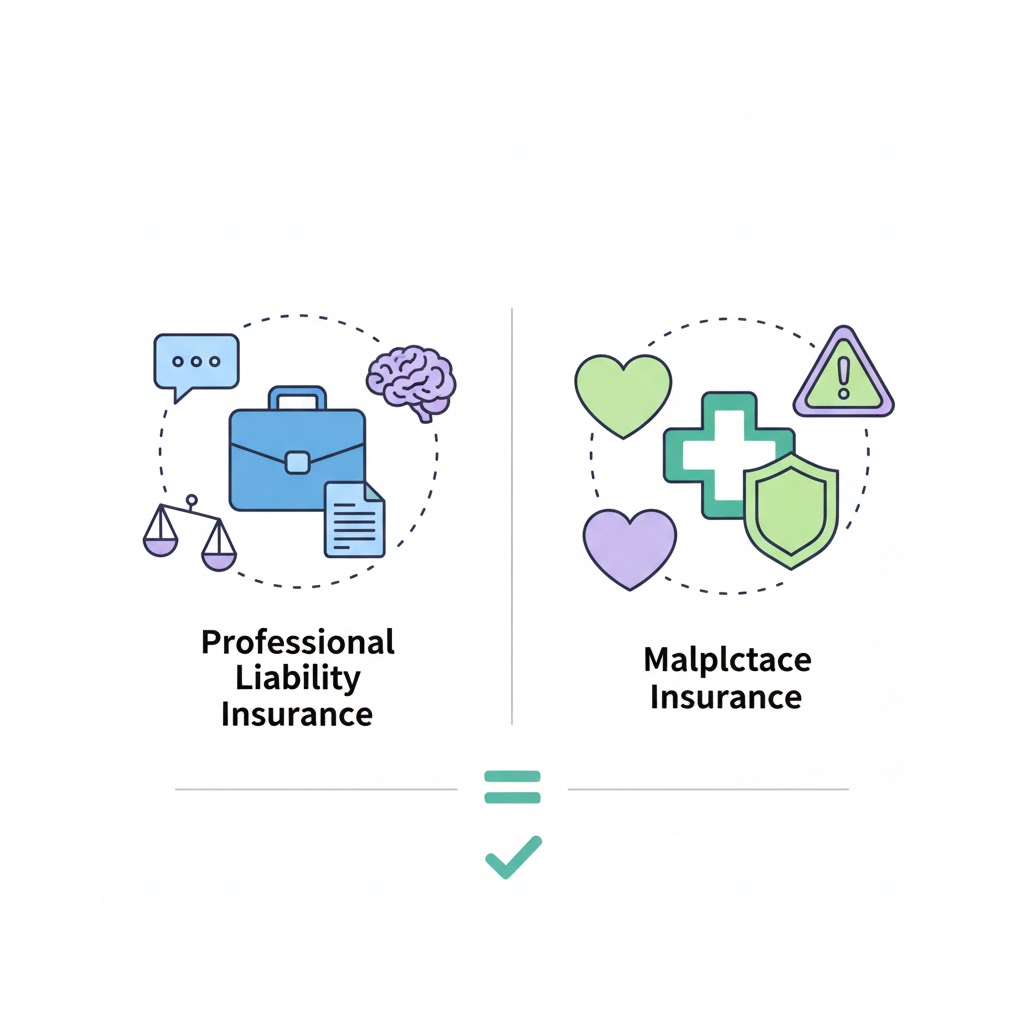
Here’s the core of professional liability vs malpractice insurance for counselors: They’re essentially the same.
- Malpractice insurance — A subset of professional liability, traditionally for healthcare providers (doctors, nurses) involving bodily injury from errors like misdiagnosis or treatment failures.
- In mental health fields (counseling, psychotherapy, social work), “malpractice insurance” interchangeably means professional liability. It covers non-physical harms like emotional distress from alleged negligence.
Industry experts (e.g., American Counseling Association partners) and providers (HPSO, CPH & Associates, CM&F) use both terms for identical policies tailored to therapists and counselors.
Key takeaway: For non-prescribing counselors, no meaningful difference exists. “Malpractice” evokes medical connotations, but policies address counseling-specific risks like boundary violations or failure to prevent harm.
Some nuances:
- Medical malpractice (for MDs) often features higher limits and costs due to physical injury risks.
- Counselor policies emphasize ethical complaints, HIPAA violations, and telehealth.
Key Differences: Professional Liability vs General Liability
Don’t confuse professional liability with general liability insurance—they complement each other.
| Aspect | Professional Liability (Malpractice/E&O) | General Liability |
|---|---|---|
| Covers | Claims from professional services (negligence, errors in advice/therapy) | Bodily injury or property damage on premises (slip-and-fall, client injures self in office) |
| Examples | Client sues over alleged improper treatment leading to worsening condition | Client trips in waiting room, breaks arm |
| Typical for Counselors | Essential—core risk from counseling work | Useful for office-based practices; often bundled |
| Cost Impact | Higher premiums due to claim frequency | Lower, but add-on for full protection |
Many counselors bundle both in a Business Owners Policy (BOP) for comprehensive coverage.
Common Claims Against Counselors and How Insurance Responds
Real-world data highlights top risks:
- Boundary Violations/Sexual Misconduct — Accounts for ~44% of claims. Allegations of inappropriate relationships or advances. Policies often include sub-limits for defense.
- Breach of Confidentiality — Unauthorized disclosure or HIPAA violations.
- Improper Treatment or Failure to Prevent Harm — Claims of inadequate suicide risk assessment or relapse prevention in addiction counseling.
- Licensing Board Complaints — Ethical investigations; many policies reimburse defense up to $25,000–$150,000.
- Misdiagnosis or Inadequate Care — Failing to refer or recognize severe issues.
Real-Life Scenarios
- Scenario 1: A marriage counselor advises separation; couple divorces and one spouse sues for “emotional harm.” Professional liability covers defense, showing advice met standards.
- Scenario 2: Client shares suicidal ideation; you document a safety plan, but attempt occurs. Family alleges negligence. Insurance funds experts to prove reasonable care.
- Scenario 3: Telehealth session records breach via unsecured platform. HIPAA claim follows—covered under cyber/additional endorsements.
These examples show even ethical practice faces risks. Insurance enables focus on care, not fear.
How Much Does Professional Liability Insurance Cost for Counselors?
Costs vary by factors:
- Location and hours worked
- Claims history
- Coverage limits (common: $1M per claim/$3M aggregate)
- Add-ons (telehealth, general liability)
Average premiums:
- Full-time counselors: $400–$800/year (~$35–$65/month)
- Part-time or new graduates: As low as $300/year
- Group practices: Higher, but per-person discounts
Top providers (as of 2026 trends):
- CPH & Associates → Counselor specialist; occurrence coverage, free attorney helpline.
- HPSO → ACA partner; comprehensive, including telehealth.
- CM&F Group → Portable, high-rated carrier; NBCC-endorsed options.
- American Professional Agency (APA) → Competitive rates, no membership required.
Shop multiple quotes—differences reach hundreds annually.

Sample Cost Breakdown
For a solo LPC with $1M/$3M limits:
- Base professional liability: $500/year
- General liability add-on: +$200–$400
- Discounts (part-time, student): -20–50%
Choosing the Right Policy: Practical Steps
- Assess Risks — Consider telehealth, group vs solo, high-risk clients (suicide, addiction).
- Compare Occurrence vs Claims-Made — Prefer occurrence for lifetime protection.
- Check Extras — Licensing defense, sexual misconduct sub-limits, cyber liability.
- Get Quotes — Use broker or direct sites; provide accurate hours/license details.
- Review Annually — Update for practice changes.
Pro tip: Test scenarios—quote part-time vs full-time to see savings.
For broader business protection, explore general liability insurance for online small business sellers if offering virtual services, or small business insurance requirements for home-based LLC for remote setups.
FAQs About Professional Liability vs Malpractice Insurance for Counselors
Is malpractice insurance required for counselors?
No federal mandate exists, but many states, licensing boards, or contracts require it. Professional ethics (e.g., ACA Code) strongly recommend it. Employer coverage often proves insufficient—get your own.
Can I rely on my employer’s policy?
Not fully. It protects the agency first; conflicts arise in joint suits. Individual policies prioritize you.
Does it cover telehealth or online counseling?
Most modern policies do, but confirm. Add cyber liability for data breaches.
What if I’m a student or intern?
Discounted rates available (e.g., via ACA/HPSO). Essential during practicum.
Conclusion
Navigating professional liability vs malpractice insurance for counselors boils down to one truth: They’re the same critical shield against career-threatening claims. In a field of deep trust and vulnerability, even baseless allegations devastate finances and reputation without protection.
Investing in a solid policy—ideally occurrence-form with robust limits and extras—secures freedom to help clients without constant worry. Average costs remain affordable compared to one claim’s price tag.
Ready to protect your practice? Compare quotes from trusted providers today, and consider bundling with other coverages like business insurance basics. Your future self (and clients) will thank you.