
Bridging the Financial Chasm: Your Comprehensive Guide to GAP Car Finance Insurance in 2025
Imagine driving off GAP Car Finance Insurance the lot in your brand-new car, the scent of fresh leather filling the air, a smile plastered across your face. It’s a significant investment, a dream come true for many. But what happens if, just a few months or a year down the line, that beautiful new vehicle is unfortunately totaled or stolen? GAP Car Finance Insurance You might assume your standard car insurance will cover the full cost, allowing you to settle your loan and move on. However, this is where many people encounter a harsh financial reality: the dreaded “gap.” This isn’t just any gap; it’s the financial chasm between what your insurer pays out and what you still owe on your car loan or lease. Understanding GAP car finance insurance is absolutely crucial in 2025, as vehicle depreciation continues to be a significant factor in automotive financing.
This isn’t just about understanding a product; it’s about protecting your financial well-being and preventing a potentially devastating out-of-pocket expense. As someone who’s spent years navigating the complexities of automotive financing and insurance, I’ve seen firsthand how GAP Car Finance Insurance can be a financial lifeline for many. Without it, you could be left without a car, still making payments on a vehicle you no longer possess. It’s a scenario no one wants to face, yet it’s surprisingly common.
Table of Contents
Key Takeaways
- What is GAP Insurance? GAP (Guaranteed Asset Protection) insurance covers the difference between your car’s actual cash value (ACV) paid by your standard insurer and the outstanding balance on your car loan or lease if your vehicle is declared a total loss.
- Why You Need It in 2025: Rapid vehicle depreciation, longer loan terms, and higher loan-to-value ratios make GAP car finance insurance more relevant than ever, especially for new and nearly new vehicles.
- Who Benefits Most: Those with new or used cars purchased with a low down payment, long loan terms, or those who rolled negative equity from a previous car loan into their current financing.
- Types of Coverage: Beyond basic GAP, options like Return to Invoice (RTI) and Vehicle Replacement Plus (VRP) offer enhanced protection, sometimes covering more than just the outstanding finance.
- Where to Buy: You can purchase GAP insurance from dealerships, independent insurance providers, or specialist brokers, with varying costs and benefits. Always compare quotes.
The Unseen Risk: Decoding GAP Car Finance Insurance
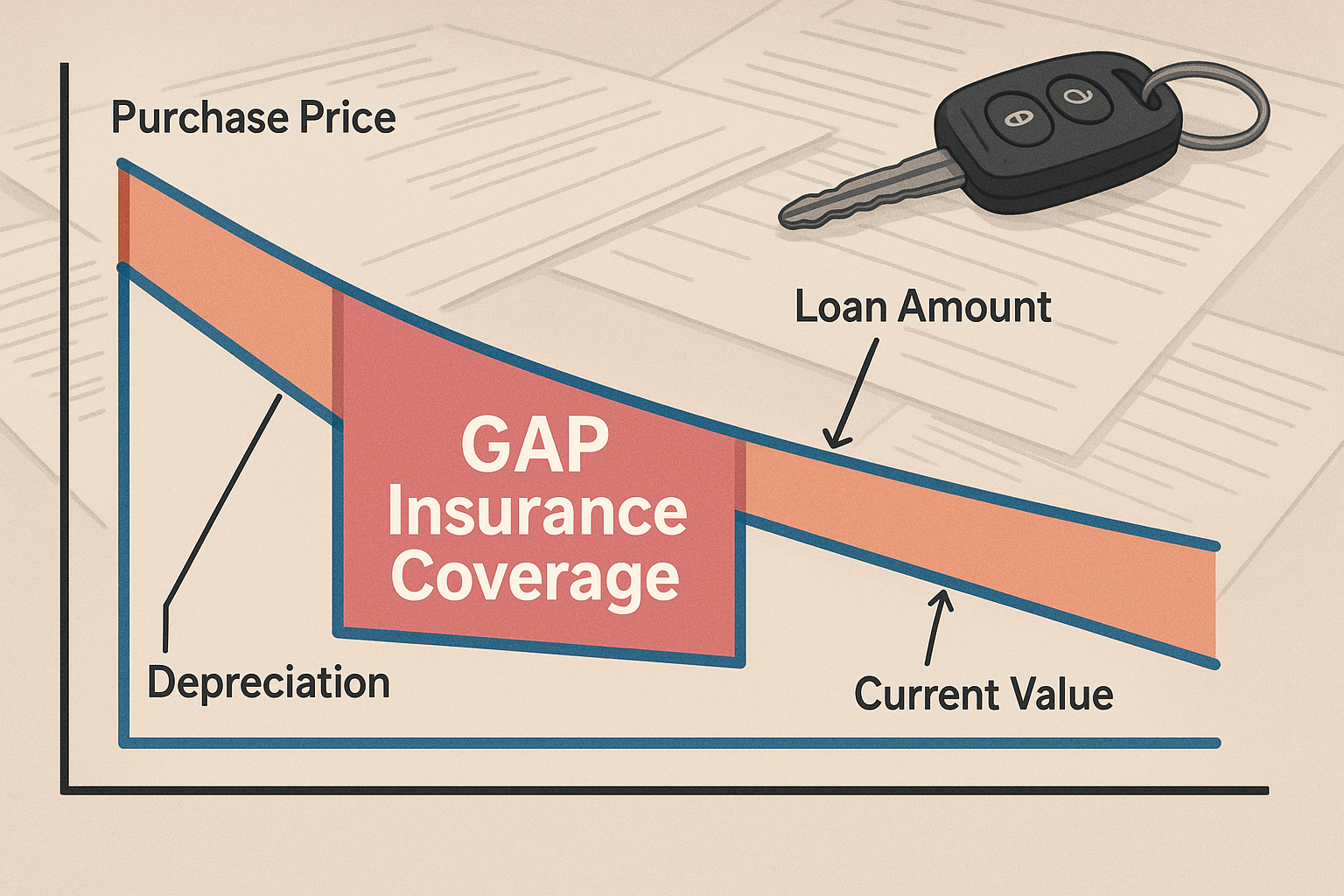
Let’s break down what GAP car finance insurance truly is and why it’s a non-negotiable consideration for many car owners today. The term “GAP Car Finance Insurance” stands for Guaranteed Asset Protection. At its core, it’s designed to protect you from a common financial pitfall: the disparity between your vehicle’s actual cash value (ACV) and the remaining balance on your car loan or lease, should your car be deemed a total loss due to accident, theft, or natural disaster GAP Car Finance Insurance.
Think about it: the moment you drive a new car off the lot, its value begins to depreciate. This isn’t just an anecdotal observation; it’s a well-documented economic reality. Some estimates suggest a new car can lose 10-20% of its value in the first year alone, and up to 60% within five years [1]. Meanwhile, your loan balance decreases much more slowly, especially in the initial years when a larger portion of your payments goes towards interest.
The “Gap” Explained: A Real-World Scenario
Let me illustrate this with a simple story. My friend, Sarah, bought a new SUV in late 2024 for £30,000. She put down a small deposit of £2,000 and financed £28,000 over five years. Six months later, in early 2025, her SUV was unfortunately involved in a severe collision and declared a total loss. Her comprehensive car insurance policy, as standard, assessed the vehicle’s actual cash value (ACV) at the time of the accident. Due to rapid depreciation, the insurer determined the ACV to be £24,000.
However, Sarah still owed approximately £27,000 on her finance agreement. Here’s the math:
- Outstanding Loan Balance: £27,000
- Insurance Payout (ACV): £24,000
- The “Gap”: £3,000
Without GAP car finance insurance, Sarah would have received £24,000 from her insurer, leaving her with a £3,000 debt for a car she no longer owned. On top of that, she’d have to find a new down payment for a replacement vehicle. It’s a double whammy! Fortunately, Sarah had invested in GAP Car Finance Insurance, which stepped in to cover that £3,000 difference, settling her loan completely. This allowed her to start fresh without the burden of negative equity.
This scenario isn’t unique; it plays out daily for thousands of drivers. That’s why understanding this type of protection is so vital. It’s not just an add-on; for many, it’s a financial safety net GAP Car Finance Insurance.
Why Depreciation Creates the Need for GAP in 2025
Several factors amplify the need for GAP car finance insurance in the current automotive landscape of 2025:
- Rapid Depreciation: As mentioned, new cars lose value quickly. This is exacerbated by the pace of technological advancement and the constant introduction of new models, making older models less desirable sooner.
- Longer Loan Terms: It’s increasingly common for car loans to stretch over 60, 72, or even 84 months. While this lowers monthly payments, it means you’re building equity slower and are upside down on your loan for a longer period [2].
- Low or No Down Payments: Many consumers opt for minimal or no down payment to reduce upfront costs. This immediately puts them in a negative equity position from day one, where they owe more than the car is worth.
- Rolling Over Negative Equity: Some drivers trading in an old car with an outstanding loan balance will roll that negative equity into a new finance agreement. This inflates the new loan amount, making the “gap” even larger and more dangerous.
- Rising Car Prices: While car prices have fluctuated, the general trend has been upwards, leading to larger loan amounts and, consequently, larger potential gaps.
| Factor | Impact on “The Gap” |
|---|---|
| Rapid Depreciation | Increases the speed at which ACV falls below loan balance. |
| Long Loan Terms | Extends the period of negative equity. |
| Low/No Down Payment | Starts you in negative equity from day one. |
| Rolled-Over Equity | Significantly inflates the initial loan amount. |
| Higher Car Prices | Leads to larger overall debt and potential gap. |
Who Should Seriously Consider GAP Car Finance Insurance?
While it’s beneficial for many, GAP car finance insurance is particularly recommended for individuals who:
- Bought a new car: New cars depreciate fastest.
- Made a small down payment (less than 20%): You start with less equity.
- Financed the vehicle for a long term (60+ months): Equity builds slowly.
- Rolled negative equity from a previous car into the new loan: You already owe more than the current car’s value.
- Leased a vehicle: Lease agreements often have strict clauses about total loss, and GAP insurance can prevent significant penalties.
- Purchased a car that depreciates quickly: Some luxury or high-performance vehicles can lose value rapidly.
If any of these apply to you, then seriously exploring GAP insurance in 2025 is a smart financial move. It’s about proactive financial planning, not reactive damage control.
Beyond Basic Protection: Types of GAP Car Finance Insurance and Where to Buy
It’s not a one-size-fits-all world when it comes to GAP car finance insurance. While the core concept remains the same – bridging the gap – there are different types of policies offering varying levels of protection. Understanding these distinctions is key to choosing the right coverage for your specific situation. Furthermore, knowing where to purchase this insurance can save you a considerable amount of money.
Exploring the Varieties of GAP Coverage
While the most common form of GAP Car Finance Insurance covers the difference between your insurer’s payout and your outstanding loan, some policies offer enhanced benefits:
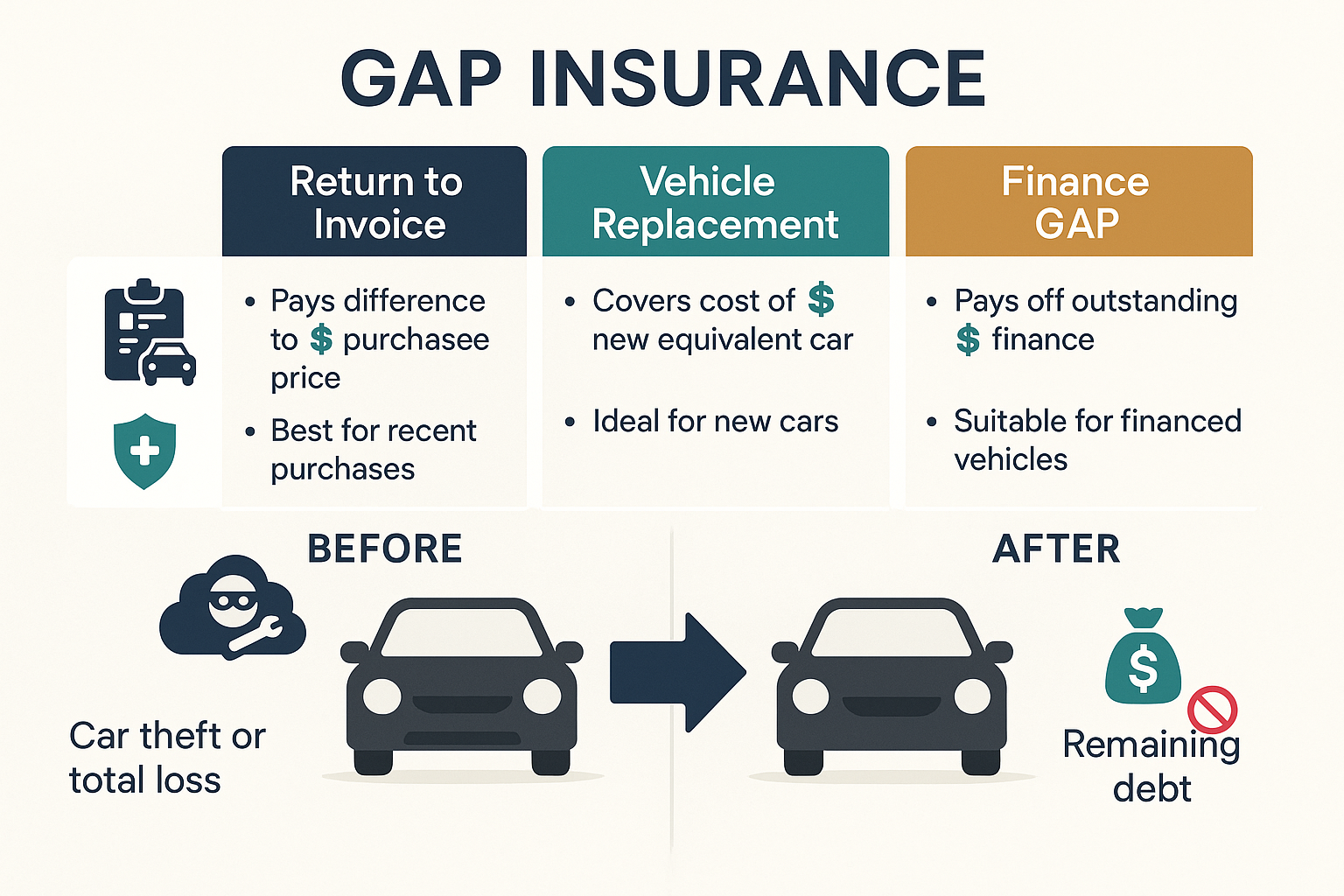
- Finance GAP (or Basic GAP): This is the most straightforward and common type. It covers the difference between your motor insurer’s total loss settlement and the outstanding balance of your finance agreement on the vehicle. This is what Sarah from our earlier example had.
- Return to Invoice (RTI) GAP: This type of policy is a step up. If your vehicle is written off, an RTI policy pays the difference between your motor insurer’s settlement and the original purchase price of the vehicle, or the outstanding finance, whichever is greater. This means you could get back the full amount you paid for the car, allowing you to buy a similar replacement without being out of pocket. This is incredibly valuable for new car buyers.
- Vehicle Replacement Plus (VRP) GAP: This is often considered the most comprehensive. Should your vehicle be declared a total loss, a VRP policy will pay the difference between your motor insurer’s settlement and the cost of replacing your vehicle with a brand-new one (even if the price has increased), or the outstanding finance, whichever is greater. It aims to put you in a position to get a like-for-like replacement, considering inflation and new model year price increases. This is particularly appealing for those buying brand new cars and wanting maximum peace of mind.
- Lease GAP: Specifically designed for leased vehicles, this covers the outstanding lease payments, any early termination fees, and excess mileage or wear and tear charges that your primary insurer might not cover in a total loss situation.
- Agreed Value GAP: Less common, this type is sometimes offered for used cars. Instead of the original invoice price, it uses an agreed valuation of the vehicle at the start of the GAP policy.
When considering which type of GAP car finance insurance is right for you in 2025, think about your priorities. Do you just want to clear your loan, or do you want to be able to replace your car with a similar model, even if prices have risen?
Where to Purchase Your GAP Car Finance Insurance
The purchasing options for GAP car finance insurance are diverse, and understanding them is crucial for securing the best deal.
- Dealerships: This is often the most common place where GAP insurance is offered. It’s convenient as it can be added to your finance agreement. However, dealership GAP policies can sometimes be significantly more expensive than those offered elsewhere. The convenience factor often comes with a premium price tag. My cousin, Mark, once bought a new van and the dealership quoted him £700 for GAP. He nearly signed up, but thankfully, I advised him to shop around.
- Independent Insurance Providers/Specialist Brokers: These are often the most cost-effective routes. Specialist GAP insurance providers and brokers focus solely on this type of product, offering competitive pricing and a range of policy options. They can often provide the same or better coverage than a dealership at a fraction of the cost. Mark eventually found a comparable policy from an independent broker for £250 – a saving of £450! This is why it’s always worth getting multiple quotes.
- Your Existing Car Insurer: Some primary car insurance providers offer GAP insurance as an add-on to your comprehensive policy. It’s worth checking if this is an option, as bundling policies can sometimes lead to discounts. However, ensure the coverage matches what specialist providers offer.
- Banks/Credit Unions: If you financed your car through a bank or credit union, they might offer their own GAP insurance products. These can sometimes be more reasonably priced than dealership offerings.
Tips for Purchasing GAP Car Finance Insurance:
- Shop Around: Always get quotes from at least three different sources (dealership, independent broker, primary insurer).
- Read the Small Print: Understand the policy limits, exclusions, and claims process. Does it cover negative equity rolled over from a previous car? What’s the maximum payout?
- Compare Coverage: Don’t just compare prices; compare the actual benefits. Is it Finance GAP, RTI, or VRP? What’s the maximum claim limit?
- Consider Your Timeline: GAP insurance is typically most beneficial in the first few years of vehicle ownership due to rapid depreciation.
- Check Your Existing Policies: Ensure you don’t already have some form of GAP coverage through an existing policy or credit card benefits.
The Cost of GAP Insurance in 2025
The cost of GAP car finance insurance varies widely based on several factors:
- Vehicle Price: More expensive vehicles generally incur higher GAP insurance premiums.
- Loan Amount and Term: Larger loans and longer terms often mean higher premiums, as the potential gap is larger.
- Type of Coverage: RTI and VRP policies are typically more expensive than basic Finance GAP due to their enhanced benefits.
- Provider: As highlighted, dealerships often charge more than independent brokers.
- Policy Length: Policies can range from 1 to 5 years.
In 2025, you can expect to pay anywhere from £150 to £500 (or sometimes more for high-value vehicles or comprehensive policies) for a multi-year GAP Car Finance Insurancepolicy from an independent provider. This upfront cost, when compared to a potential debt of thousands of pounds, often makes the investment seem negligible. It’s important to see it as a protection for your primary asset and financial stability.
Key Exclusions and Limitations to Be Aware Of
Even the best GAP car finance insurance policies come with exclusions. It’s crucial to be aware of these to avoid surprises:
- Exceeding Mileage Limits: Some policies have annual mileage limits. If exceeded, your claim might be affected.
- Pre-existing Damage: Damage that existed before the policy started is usually not covered.
- Vehicle Not Maintained: If your vehicle isn’t roadworthy or hasn’t been maintained according to manufacturer guidelines, a claim could be rejected.
- Outstanding Payments: If you have multiple missed finance payments, your claim might be jeopardized.
- Vehicles Used for Certain Purposes: Cars used for racing, taxis, or hire might be excluded unless specifically covered.
- Wear and Tear: Standard wear and tear or mechanical breakdowns are not covered, only total loss events.
- Policy Maximums: Every policy has a maximum payout limit. Ensure this is sufficient to cover your potential gap.
Always ask your provider for a complete list of exclusions and ensure you understand them before committing to a policy.
The Financial Safety Net: Maximizing Your GAP Coverage and Making a Claim
Having GAP car finance insurance is one thing, but understanding how to maximize its benefits and navigate the claims process is equally important. In 2025, with so many financial commitments, ensuring you’re fully protected against unforeseen automotive events is a smart strategy.
When to Consider Cancelling Your GAP Policy
While GAP insurance is vital early in your loan term, there might come a point where it’s no longer necessary. This usually occurs when:
- You’ve Paid Off a Significant Portion of Your Loan: As your loan balance decreases, your equity in the car increases. The “gap” shrinks and may even disappear, meaning you owe less than the car’s ACV.
- Your Car’s Market Value Exceeds Your Loan Balance: You can track your car’s estimated value through online tools and compare it to your outstanding loan balance.
- You’re Selling or Trading In Your Car: Once you no longer own the vehicle, the policy is irrelevant.
Most GAP policies offer a pro-rata refund if you cancel early. So, if you reach a point where the protection is no longer needed, it’s worth checking your policy documents for cancellation terms and potential refunds. This is a common oversight that can leave money on the table.
The Claims Process for GAP Car Finance Insurance
Making a claim on your GAP car finance insurance should ideally be a smooth process, but being prepared can make a big difference. Here’s a typical outline:
- Report to Your Primary Insurer: The very first step is to report the total loss event (accident, theft, fire) to your comprehensive car insurance provider. They will assess the damage and determine if your vehicle is a total loss, then provide you with their settlement offer (the ACV).
- Contact Your GAP Insurer: Once your primary insurer confirms a total loss and provides their settlement figure, contact your GAP insurance provider. Do this promptly, as there are usually time limits for initiating a claim.
- Provide Necessary Documentation: Your GAP insurer will require documents such as:
- Your GAP insurance policy number.
- Your primary motor insurance policy details and claim number.
- The total loss settlement letter from your primary insurer, stating the ACV payout.
- Your finance agreement details, showing the outstanding balance at the time of the loss.
- Proof of original purchase price (if you have an RTI or VRP policy).
- Police report (in case of theft).
- Assessment and Payout: The GAP insurer will review your documentation and calculate the difference between your primary insurer’s payout and your outstanding finance (or original invoice/replacement cost, depending on your policy type). They will then pay this “gap” directly to your finance company, or sometimes to you if there’s a surplus, clearing your debt.
I recall a client, Mr. Henderson, whose car was stolen right outside his home in late 2024. He was distraught, not just about the loss of his vehicle, but the looming finance payments. He followed these steps meticulously, and within a few weeks, his GAP insurer paid the £4,500 difference that his primary insurer wouldn’t cover. He expressed immense relief, saying, “It felt like a weight lifted off my shoulders. Without GAP, I would have been paying for a ghost car.” This anecdote really underscores the tangible peace of mind that GAP car finance insurance provides.
Is GAP Insurance Always the Right Choice?
While I advocate for the benefits of GAP car finance insurance for many, it’s important to consider if it’s the right choice for everyone in 2025.
You might not need GAP insurance if:
- You made a very large down payment (e.g., 50% or more): Your equity position might mean you’re unlikely to be upside down on your loan.
- You paid cash for your vehicle: No loan means no gap to cover.
- You have a very short loan term: You’ll build equity quickly.
- Your car is old and fully depreciated: The ACV is likely very close to its market value, and you might already own it outright.
- Your primary insurer offers “new car replacement” coverage: Some premium comprehensive policies will replace a totaled new car with a brand new one within the first year or two, which can negate the need for GAP during that period.
Ultimately, the decision comes down to a risk assessment of your personal financial situation and the specifics of your car purchase. However, for the majority of new and nearly new car buyers in 2025 who rely on financing, GAP car finance insurance represents a prudent and often necessary investment for financial protection.
Conclusion
Navigating the world of car finance and insurance can feel like a labyrinth, but understanding key protections like GAP car finance insurance empowers you to make informed decisions that safeguard your financial future. As vehicles continue to depreciate rapidly and loan terms extend, the potential for a significant financial “gap” in the event of a total loss remains a very real threat in 2025.
By proactively securing a suitable GAP Car Finance Insurance policy, you’re not just buying insurance; you’re buying peace of mind. You’re ensuring that if the worst happens, you won’t be burdened with thousands of pounds of debt for a vehicle you no longer possess. Whether you opt for basic Finance GAP, the more comprehensive Return to Invoice, or the ultimate protection of Vehicle Replacement Plus, the investment is often a small price to pay for such significant financial security.
Remember the stories of Sarah and Mr. Henderson – they are not isolated incidents. They highlight the tangible benefits of being prepared. In an age where financial security is paramount, adding GAP car finance insurance to your automotive protection strategy is a wise and responsible choice.
Actionable Next Steps:
- Review Your Current Situation: If you have a financed car, check your loan balance against your car’s estimated market value. Are you in negative equity?
- Get Multiple Quotes: Don’t just accept the dealership’s offer. Reach out to independent GAP insurance brokers and your primary car insurer for comparative quotes.
- Understand Policy Types: Decide whether basic Finance GAP, RTI, or VRP aligns best with your financial goals and vehicle.
- Read the Fine Print: Familiarize yourself with policy limits, terms, and exclusions before purchasing.
- Re-evaluate Periodically: As your loan balance decreases, periodically assess if your GAP insurance is still necessary or if a pro-rata refund is an option.
References
[1] Edmunds. (2023). How Much Does a New Car Depreciate? Retrieved from https://www.edmunds.com/car-buying/how-much-does-a-new-car-depreciate.html (Note: While Edmunds provides general depreciation trends, specific figures for 2025 are projections based on historical data.)
[2] Experian. (2024). State of the Automotive Finance Market Report Q4 2023. Retrieved from https://www.experian.com/automotive/automotive-finance-market-trends-statistics (Note: Experian reports on loan term trends, which are generally projected to continue in 2025.)
GAP Insurance Cost Calculator 2025
🚗 GAP Insurance Cost & Risk Estimator 2025 🛡️
Estimate your potential “gap” and see how GAP insurance can protect you.
Fill in the details above and click “Calculate” to see your estimated financial exposure.
Disclaimer: This calculator provides an estimate for illustrative purposes only. Actual figures may vary based on your specific finance agreement, insurance policy, and market conditions in 2025. Consult with a financial advisor or insurance professional for personalized advice.