Umbrella Policy Limits for Small Business Owners Explained
Umbrella Policy Limits for Small Business Owners Explained
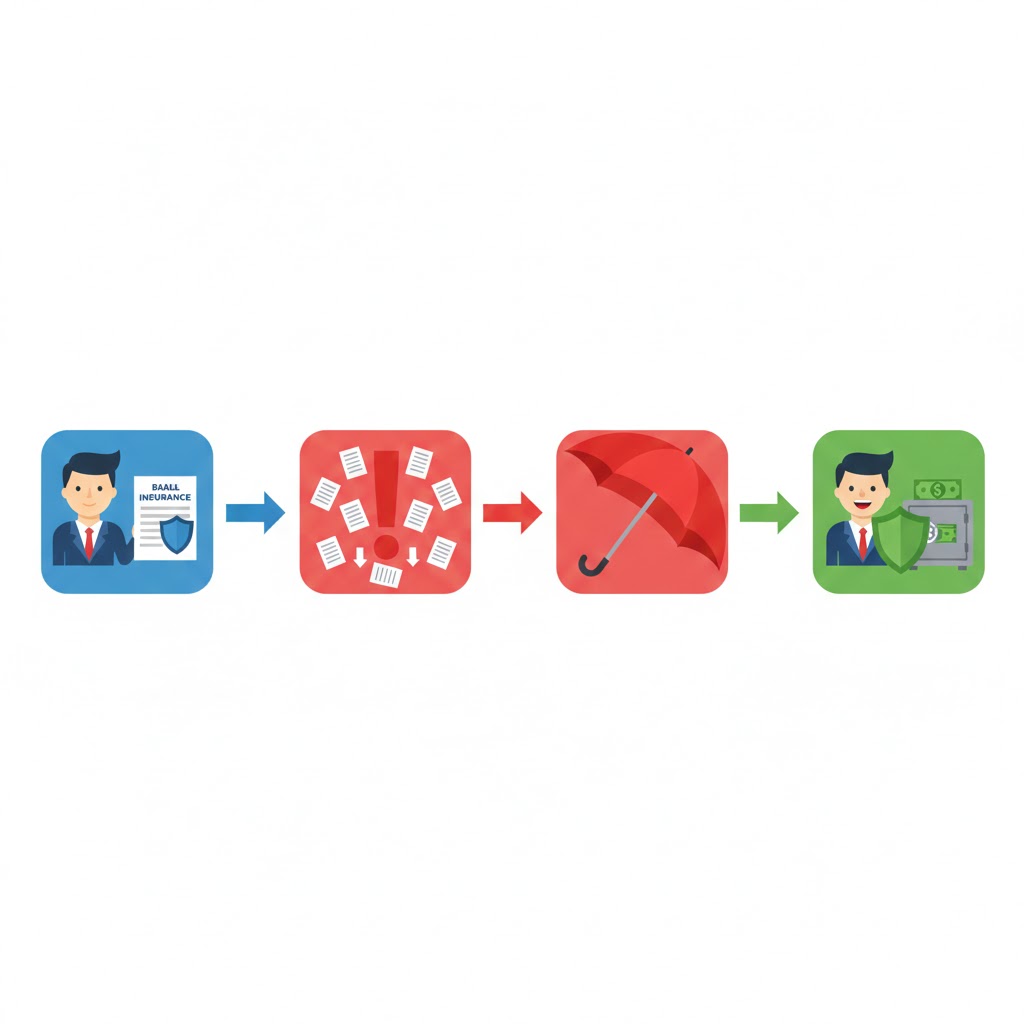
Imagine this: You’re a small retail shop owner in a busy strip mall. A customer slips on a wet floor, suffers a serious injury, and sues your business for $2.5 million in medical bills, lost wages, and pain and suffering. Your general liability insurance has a $1 million per-occurrence limit, and your commercial auto policy adds another $500,000—but you’re still on the hook for $1 million out of pocket. That kind of shortfall could wipe out years of hard work, force you to sell assets, or even close your doors.
This is where umbrella policy limits for small business owners come into play. Commercial umbrella insurance (also called excess liability insurance) acts as a financial safety net, kicking in when your primary liability policies—like general liability, commercial auto, or employers’ liability—reach their maximum payout. It’s an affordable way to extend protection against catastrophic claims, giving you peace of mind without breaking the bank.
As a small business owner myself in the past, I’ve seen how rising lawsuit costs and medical expenses make this coverage essential. Today, even modest operations face multimillion-dollar risks. In this guide, we’ll break down everything you need to know about umbrella policy limits, from how they work to choosing the right amount for your business.

What Is Commercial Umbrella Insurance and How Does It Work?
Commercial umbrella insurance provides excess liability coverage that sits “on top” of your underlying policies. It doesn’t replace them—it supplements them.
Key Components of an Umbrella Policy
- Underlying Policies: These are your base coverages (e.g., general liability with $1M/$2M limits, commercial auto). The umbrella only activates after these are exhausted.
- Drop-Down Coverage: In some cases, it can fill gaps by covering claims not fully addressed by primary policies, like certain advertising injuries.
- Limits: Typically sold in $1 million increments, starting at $1 million and going up to $10 million or more for small businesses.
The policy covers similar risks as your primary liability insurance:
- Bodily injury to third parties
- Property damage caused by your operations
- Personal and advertising injury (e.g., libel, slander)
- Legal defense costs, judgments, and settlements
What it doesn’t cover:
- Your own business property damage (that’s commercial property insurance)
- Professional errors (need errors & omissions)
- Workers’ compensation claims beyond employers’ liability
- Intentional acts or criminal activity
Umbrella coverage is surprisingly cost-effective because it only pays out in rare, high-value scenarios. Small businesses often pay around $75 per month (or $900 annually) for $1–2 million in coverage, depending on industry and risk factors.
Why Small Business Owners Need Umbrella Coverage
Lawsuits aren’t just for big corporations. Small businesses face increasing risks from slip-and-falls, product issues, auto accidents involving employees, or even advertising disputes.
Statistics show why this matters:
- The median cost of a slip-and-fall claim can exceed $20,000, but severe cases easily hit seven figures.
- Rising medical and legal costs mean even “standard” general liability limits ($1M–$2M) often fall short in catastrophic events.
Many small business owners add umbrella insurance to:
- Meet client or landlord contract requirements (often demanding $2M+ total liability)
- Protect personal and business assets from judgments piercing the corporate veil
- Gain broader protection in high-risk industries like construction, retail, or transportation
If your business interacts with customers, uses vehicles, or has employees, umbrella coverage bridges the gap between “covered” and “devastated.”
For more on foundational protection, check out our guides on general liability insurance for online small business sellers or business insurance basics.
Determining the Right Umbrella Policy Limits for Your Small Business
There’s no one-size-fits-all answer to “how much umbrella coverage do I need?” But here’s a practical framework.
Common Umbrella Policy Limits for Small Businesses
- Starting Point: Most policies begin at $1 million.
- Typical Range: Small to mid-sized businesses often choose $1 million to $5 million.
- Higher Needs: Businesses in high-risk sectors (e.g., construction, manufacturing) or with large contracts may go to $10 million+.
Umbrella limits are added in $1 million increments, making it easy to scale.
Factors Influencing Your Ideal Limit
Use this step-by-step assessment:
- Review Contractual Requirements Clients, leases, or vendors may mandate minimum limits (e.g., $2M–$5M total liability). Start here—non-compliance could cost you opportunities.
- Assess Your Risk Exposure
- High foot traffic? (Retail/restaurants → higher bodily injury risk)
- Employees driving? (Delivery/services → auto liability)
- Products sold? (Manufacturing → product liability extension)
- Evaluate Assets and Revenue Aim for coverage at least equal to your net worth + annual revenue. A $2M judgment could bankrupt a business with $500K in assets.
- Consider Industry Benchmarks
- Low-risk (office-based consultants): $1M–$2M
- Moderate-risk (retail, contractors): $2M–$5M
- High-risk (construction, transportation): $5M+
- Factor in Costs Average: $40–$75 per month per $1 million. Higher risks pay more.
Pro Tip: Reassess annually as your business grows. Try testing scenarios— what if revenue doubles? What limit would protect you then?
Real-Life Examples: How Umbrella Limits Work in Practice
Let’s walk through three practical scenarios with simple calculations to show umbrella policy limits in action.
Example 1: Retail Slip-and-Fall (Low-to-Moderate Risk)
- Underlying Policy: General liability $1M per occurrence / $2M aggregate.
- Claim: Customer severe injury → $1.8M judgment (medical $1.2M + legal/pain $600K).
- How It Pays:
- General liability covers first $1M.
- Umbrella ($2M limit) covers remaining $800K.
- Without Umbrella: You’d pay $800K personally.
- Relevance: Common for shops/cafes. A $1M–$2M umbrella often suffices here.
Example 2: Delivery Auto Accident (Vehicle-Related Risk)
- Underlying Policies: Commercial auto $500K bodily injury + general liability $1M.
- Claim: Employee causes multi-car crash → $3M total (injuries $2.5M + property $500K).
- How It Pays:
- Auto covers $500K.
- General liability covers next $1M (crossover for non-auto elements).
- Umbrella ($3M limit) covers remaining $1.5M.
- Formula for Total Protection: Underlying limits + Umbrella limit = Effective coverage (e.g., $1.5M underlying + $3M umbrella = $4.5M total).
- Relevance: Essential for any business with company vehicles. Many opt for $2M–$5M umbrella.
Example 3: Contractor Subcontractor Injury (High-Risk Industry)
- Underlying: General liability $2M + employers’ liability $1M.
- Claim: Subcontractor falls on site → $4.5M settlement.
- How It Pays:
- Primary policies exhaust $3M.
- Umbrella ($5M limit) covers $1.5M excess.
- Relevance: Construction often requires $5M+ total via umbrella to win bids. See our guide on general liability certificate for subcontractors requirements.
These examples highlight why $1M–$5M is the sweet spot for most small owners—balancing cost and protection. Play with your own numbers: What if a claim hits $3M? Adjust your umbrella accordingly.

Costs and Considerations When Choosing Limits
Expect to pay $500–$1,500 annually for $1M–$2M coverage, scaling up affordably. Factors raising premiums:
- Industry risk
- Claims history
- Location (urban areas higher)
Always maintain required underlying limits—umbrella won’t drop down if primaries are too low.
For seasonal or contractor-specific risks, explore workers’ compensation for seasonal employees or rates for independent contractors.
FAQs About Umbrella Policy Limits for Small Business Owners
1. How much umbrella insurance does a typical small business need?
Most small businesses start with $1M–$2M, scaling to $5M for higher risks or contracts. Assess your assets, revenue, and exposures—aim for coverage matching potential worst-case judgments.
2. Is commercial umbrella insurance worth it for very small operations (e.g., solo online sellers)?
Yes, especially if clients require higher limits or you have any public interaction. It’s low-cost peace of mind, and rising e-commerce disputes make it valuable.
3. Can I get umbrella coverage without strong underlying policies?
No—insurers require minimum underlying limits (e.g., $1M general liability). Gaps here could void umbrella protection.
Extra Tip: Bundle with your primary carrier for discounts and seamless claims.
Conclusion: Secure Your Business with the Right Umbrella Limits
Umbrella policy limits for small business owners provide critical excess protection, typically in $1M–$5M ranges, extending general liability, auto, and employers’ coverage against devastating claims. By evaluating risks, contracts, and assets, you can choose limits that safeguard your hard-earned success without overpaying.
Don’t wait for a rainy day—review your policies today and consider adding umbrella coverage. Test different limits based on your scenarios to see the difference it makes. For tailored advice, explore more resources or consult a licensed agent.
Protect what you’ve built—it’s one of the smartest moves a small business owner can make.